
The Fire of Youth: Michael Meade, Violence and Rites of Passage
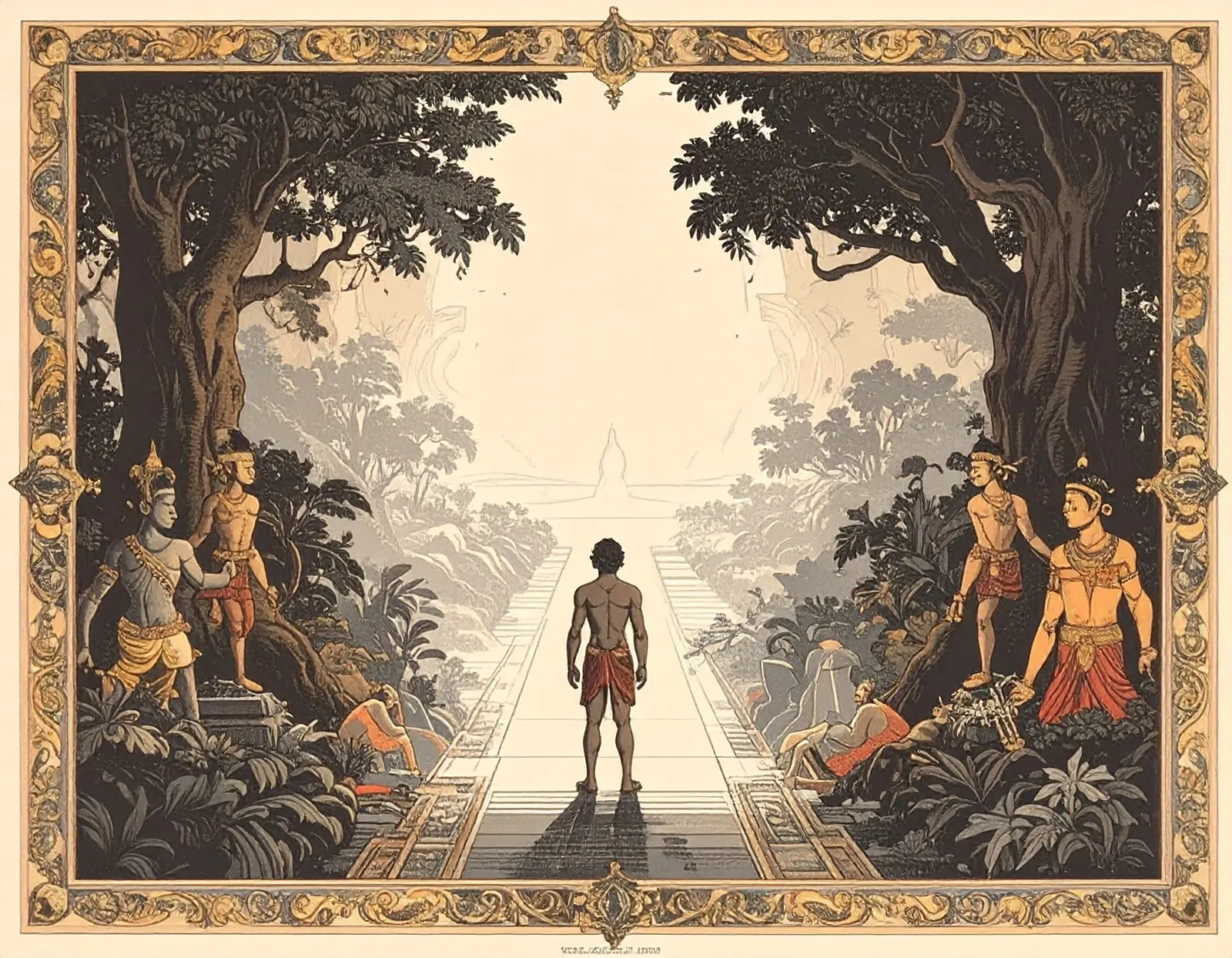
Notes on Michael Meade’s essay Violence, Despair and Young Men
In September 2025, the mythologist and storyteller Michael Meade published an essay written in the heat of yet another political assassination in the United States. I read it several times, even translated the whole thing for myself, and decided that what belonged here was something else: the notes it left on my work with men. The original essay is on the Mosaic Multicultural Foundation website, and the link is at the end.
Meade starts from a fact that research has repeated for years. Public violence is almost always committed by men, and it concentrates in two age ranges: late adolescence and midlife. What he observes next is what made me stop. These are precisely the two crossings that traditional cultures surrounded with rites of passage, and which modern society, in his words, leaves young people to cross “on their own, and with lethal weapons within reach”.
A heat looking for form
At the centre of the essay is a word from the Gisu people of Uganda: latima. It names an inner heat that intensifies in adolescence, an eruptive force with a masculine tone that can turn into impulsiveness, ruthless competition and brutality. The same substance, when it finds form, becomes a source of individuality, of ethical principles and of the courage to protect what has value. Latima is ambivalent by nature, and that ambivalence is what matters.
In my practice I often recognise this heat, including in men who left youth behind long ago. It appears as nameless anger, as shame that hardens, as a restlessness a man doesn’t know where to put. Jungian psychology inherited from alchemy a precise image for this: matter is only transformed inside a vessel, over a fire that must be contained so it doesn’t burn the house down. The problem is rarely the fire. The problem is the absence of the vessel.
“You don’t give a young man a weapon before you teach him to dance.”
Meade quotes this saying of the old Irish, and I return to it whenever I think about the place of the body in therapy. To dance is to learn rhythm, limits and belonging before learning strength. That is why breathwork and body work are part of what I offer: they are ways of giving the heat a path that is neither explosion nor silence.
Repression doesn’t erase
Meade is careful to say he is not justifying violence. He wants to go beyond condemnations that censure the act without explaining why it has become so common. Expressions like “toxic masculinity”, he says, point to part of the problem but do little to temper the extreme emotions and deep resentments underneath.
I agree, and I would add what Jung taught us about the shadow: what is denied does not disappear, it sinks into the unconscious and comes back through another door. When a culture offers no rituals, stories or elders, young people are still initiated, only by other masters. Meade speaks of a “dark initiation” offered by social media, which shapes impulses towards resentment and polarisation. Many of the men who come to me have been through some version of this.
The youth and the elder
The final part of the essay is the one that moves me most. Meade reminds us that every archetype has a pair, and that the other side of the inner youth is the wise elder. The eternal youth carries the dream of each life; the elder is the part of us that recognises that dream, values the fire and finds ways to put it at the service of shared life. The crisis we see out there would be, in large part, the absence of this elder, both in communities and within each person.
For adult men, this changes the question. The task of maturity is not to put out one’s own fire, nor to pretend it never existed, but to become able to receive it, in others and in oneself. That is what I try to do in the circles: create a place where the heat can be welcomed, named and directed, instead of hidden until it explodes.
Meade ends with a sentence I keep with me: without anyone needing to be heroic or take charge, we can help one another rediscover the old paths that lead to healing, unity and the renewal of life.
Read the original essay: Violence, Despair and Young Men, by Michael Meade (Mosaic Voices).
Newsletter
Essays by email
New essays on Jungian psychology, masculinity, myth and the body, sent to your inbox. Most are written in Portuguese, with some in English.
Free, via Substack. Unsubscribe at any time. Privacy policy.